Episode 621. Processing The Process

Oregon Shakespeare Festival Director of Literary Development and Dramaturgy Amrita Ramanan talks about the role of the dramaturg at a theatre dedicated to a playwright who’s been dead for 402 years, and discusses the planning and programs OSF has put in place to create a canon of new Histories, Comedies, Tragedies, and Romances. Our highly caffeinated conversation features distinctions between institutional dramaturgy and production dramaturgy, studying the intent of the text, carrying a sense of engagement, determining what a 400 year old play means today, identifying the ethos and identify of Shakespeare’s work, how a dramaturg’s job is very similar to a director’s, the value of gadflies, thematic connectivity, harnessing the all-important dramaturgy of the actor, and how producing new work and new playwrights, in addition to producing his 400 year old plays, actually does the greatest honor to Master Shakespeare himself. (Length 17:51

By austin, ago

Episode 619. Critic Chris Jones

Chris Jones is the chief theatre critic and Sunday cultural columnist for the Chicago Tribune, has also been recently named a reviewer for the New York Daily News, and has just written Rise Up! Broadway and American Society from Angels in America to Hamilton. Despite this hectic schedule of seeing and writing about theatre, Chris made time to chat about the role of the critic, how criticism has changed over the years and are a necessary (and valuable!) part of the ecosystem, what most great plays are about, examining not whether a play is good but what it means, an addiction to living in make-believe worlds, what happens when critics screw up, how writing about theatre is writing about life, the reality of complex relationships, the value and drawbacks of moving on to the next show, the nature of ensemble, the greatness of pre-Broadway tryouts, the democratization of critical voices, how ambition is devoutly to be wished, and what’s been the most fundamental change in criticism in the last 20-30 years. (Length 27:29)

By austin, ago

Episode 615. American Revolutions Onstage

Julie Felise Dubiner is associate director of Oregon Shakespeare Festival’s American Revolutions: The United States History Cycle, a multi-decade program of commissioning and developing 37 new plays sprung from moments of change in United States history. On my recent trip to Ashland, I was able to meet and chat with Julie about OSF’s program and the wonderful plays that have already come out of it, a couple of which — Lynn Nottage’s Sweat and Paula Vogel’s Indecent — appear on this season’s list of Most Produced Plays in the US compiled by American Theatre magazine. Featuring the question of what it means to be American, dramatizing moments of change and the problem with tying those moments to US presidents, watching the first run-thru of this generation’s Death of a Salesman, overcoming one’s shameful past in improvisation, fueling comedy with rage, how a sense of humor might save us, and the importance of writing the history of your people on to the stage. (Length 22:49)

By austin, ago

Episode 607. Getting To Edinburgh

How do you get to the Edinburgh Fringe Festival? What’s involved with producing yourself at the largest theatre festival in the world? Jamie Gower, the creator and star (sorry, operator) of Denny O’Hare: I Feel Fuzzy, takes us step by step through the process of creating a show, picking a venue, developing a budget, making peace with the idea that this will most likely be a money-losing operation, and most importantly, understanding the danger of not going. Featuring nuts and bolts, waived visas, the value of pre-planning and starting early, the advantage of not being a good puppeteer, learning how to create good press releases and posters and flyers, the importance of location location location, and the supreme importance of not waiting for permission. (Length 24:53)

By austin, ago

Episode 606. Composer Michael Roth

Composer and arranger Michael Roth has had a big summer, scoring not only the Shakespeare Center of Los Angeles production of Henry IV starring Tom Hanks, and Pamplona, the one-man play about Ernest Hemingway, starring Stacy Keach, currently having its world premiere production at the Goodman Theatre in Chicago. Michael has worked with such notable theatre artists as directors Robert Falls, Des McAnuff, and Daniel Sullivan, actors Christopher Plummer and Brian Dennehy, and songwriter Randy Newman, and he joins us to talk about with working with all these artists in a variety of media. Featuring the importance of first rehearsals, making sure Shakespeare’s songs are not perfunctory; small worlds; the challenges of writing a musical; and Shakespeare’s weird ability to be early-modern and post-modern at the same time. (Length 22:21)

By austin, ago

Episode 604. Cartoonist John Kovalic

Failed astrophysicist John Kovalic certainly landed on his feet, becoming not only a fantastic cartoonist and board game designer, but the creator of Dork Tower and Apples To Apples, illustrator of Munchkin Shakespeare, the crafty current chronicler of geek culture. On our recent trip to Madison Wisconsin, we got to sit down and talk with John about the rise of geek culture, apologies to former professors, humble roots at the UW-Madison student newspaper, the wonders of crowd-funding, skipping Advanced Micro Economics, multiple interests across the arts and the sciences, how autobiographical comics aren’t, being directed by Dominic Dromgoole, the horrible dangers of Monopoly, and the startling and slightly bittersweet success of Apples to Apples. (Length 26:27)

By austin, ago

Episode 603. Value Of Limitations

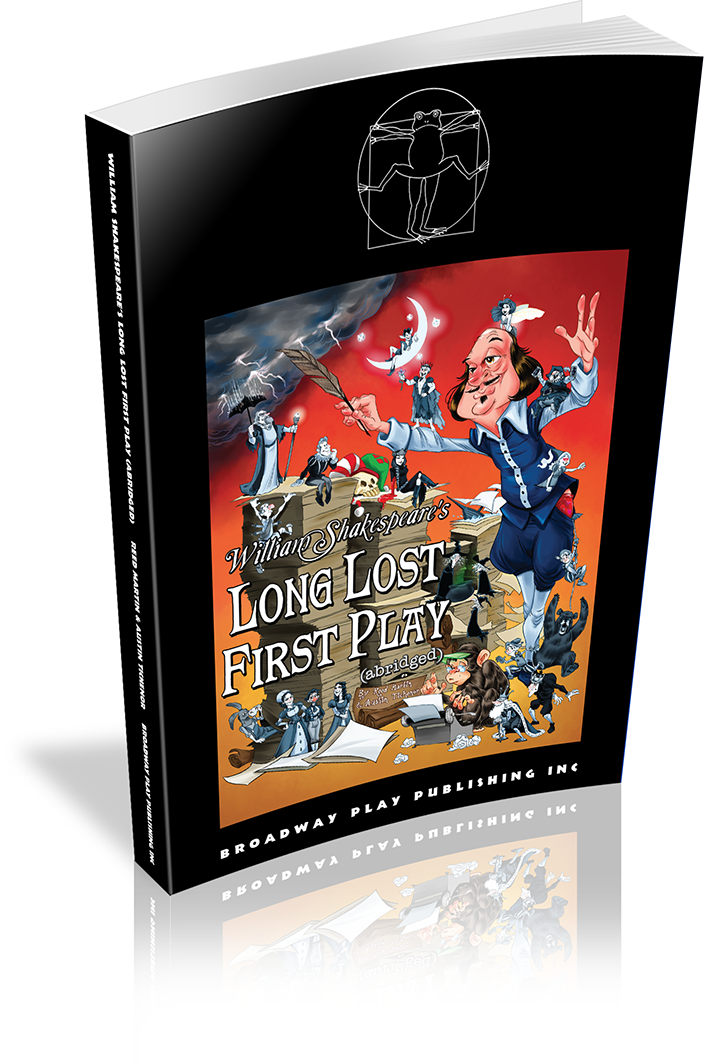
The script for William Shakespeare’s Long Lost First Play (abridged) has now been published in the US (after having been published in the UK earlier this year) and this week we talk about how the various limitations we’ve encountered — physical, institutional, and personal — have all required we make changes to the script, many of which improved the script and we decided to keep. Featuring the challenges of retraining muscle memory, the differences between a two-hour performance and an hour-long one, the possibly counterintuitive value of sanitizing for your comedic pleasure, the dangers of swearing even in Pig Latin, the joy of turning limitations into gold, the surprising distinction between crotches and nipples, the futility of coming up with a Timon of Athens joke, and the dismay of thinking that something’s terribly moving and discovering you’re only half right. (Length 20:12)

By austin, ago

Episode 601. More Lauren Gunderson

Playwright Lauren Gunderson continues the conversation we began with her last November 2017, talking about her amazing play The Book of Will, a valentine about the creation of the First Folio, the first collection of all (most) of Shakespeare’s plays in 1623. WARNING: This is a slightly spoiler-y conversation (our first spoiler-free conversation can be found here) but in it Lauren reveals the process of research, dramaturgy, and creation; and also discusses the value of preparing for loss; being present; the wonder of ephemera; Shakespeare’s amazing women (both onstage and off); practicing memory as an active thing; favorite brilliant actors; and the absolute magic of double-casting. Featuring a special appearance by Oregon Shakespeare Festival Executive Director Cynthia Rider. (Length 17:23) (Pictured: Cristofer Jean in the Oregon Shakespeare Festival production of The Book of Will. Photo by Jenny Graham)

By austin, ago

Episode 600! American Theatre Magazine

For this milestone episode, we talk to the journal of record for the American theatre industry: American Theatre magazine. Managing Editor Russell Dembin and Associate Editor Allison Considine discuss the magazine’s origins, its operations, its expansion, and its impact. Featuring changing publishing schedules, expanded focus, evolving trends, exciting productions, bold new work, new takes on old work, challenges facing the industry, stepping up an online presence, shout-outs to Senior Editor Diep Tran, theme issues, changing job descriptions, ideas for possible future projects, a special appearance from Most Produced Playwright Who Isn’t William Shakespeare Lauren Gunderson, and above all, creating a go-to destination for all theatre practitioners — and fans. (Length 22:21)

By austin, ago

Episode 596. Nicole Galland’s D.O.D.O.

Friend of the podcast, novelist Nicole Galland (I, Iago), has co-authored (with Neal Stephenson) a wonderful sci-fi time-travel thriller-comedy called The Rise and Fall of D.O.D.O., which the San Francisco Chronicle calls “a high-stakes techno-farce with brains and heart!” D.O.D.O. is now out in paperback so Nicole returns to talk about the book’s creation, the difficulties of describing your characters, how she met Neal Stephenson, the burden of having too many interests in too many places, the rarity of authorial rebranding, rewriting during the editing stage, how the authors’ writing partnership informed the relationship between the two main characters, some tantalizing clues about the sequel, and how one transitions from an historical to a sci-fi novelist. (Length 18:53)

By austin, ago

Episode 592. Christopher Moore’s ‘Noir’

Christopher Moore, the author of such wonderful comic novels as Lamb: The Gospel According to Biff, Christ’s Childhood Pal; Fool; The Serpent of Venice; The Stupidest Angel; Bloodsucking Fiends; Practical Demonkeeping; Sacre Bleu, and many others, has a new novel out called Noir, and it’s wonderfully comic, weird, and surprisingly poignant, all of which are hallmarks of a Chris Moore novel. Chris talks about this new novel’s inspirations which, it turns out, are varied and many. Featuring San Francisco history, film and literary precedent, surprisingly Shakespearean inspirations, weird connections to Roswell, loving language, shout-out to Damon Runyon, the joys of touring (and how to train for it), teasing future novels, and the Top Secret First Thing They Teach You at Famous Author School. (Length 21:18)

By austin, ago

Episode 591. I Was Cleopatra

Dennis Abrams has written the new YA novel I Was Cleopatra, the fictional memoir of John Rice, a boy actor in the King’s Men, Shakespeare’s acting company, who played many of Shakespeare’s signature female roles, including Lady Macbeth, Cordelia, and Cleopatra. I Was Cleopatra was just published last week and its author discusses the creation of his novel, the amount of research he did, the wonder of being surprised by your main character, the supplemental reading he recommends, how we know when Shakespeare wrote his plays, the fun of deconstructing Shakespeare’s texts, and the ultimate joy of all: annoying Oxfordians! (Length 21:18)

By austin, ago

Episode 590. Serious Actor Clown

Philip Earl Johnson stars in Enemy of the People at the Goodman Theatre in Chicago and talks about the creation of his role in this new adaptation, and how he divides his time between theatre work and his other life as the RenFaire clown MooNiE. Featuring the fundamental virtues of conviction and truth, brushes with rockstar greatness, travels with Angels in America, the value of getting through 200 shows, the art of combining Ibsen with Charlie Chaplin, the magic of whistling, the inspiration of junkyard dogs, and the glory of scoring a leading role the old-fashioned way — by auditioning. (Length 24:17)

By austin, ago

Episode 588. Resurrecting The Bible

We resurrected The Bible: The Complete Word of God (abridged) for its first American performance in almost four years and this cast’s first performance in more than eight. After the raucous standing ovation, Dominic Conti (center), Reed Martin, and Austin Tichenor talk about what it’s like returning to a show after such a long absence, and what it means, personally, to perform this particular show. Featuring testaments old and new, civilized rehearsing, born-again favorites, missing trunks, Catholic raves, recreating a fourth dummy, consoling the ignorant, remembering kerfuffles, begging Michael Faulkner (right), and happiest of all, celebrating the Bible through joy and laughter. (Length 17:47) (Also pictured: Tiger Reel. Photo by Eric Vizents)

By austin, ago

Episode 587. Slings & Arrows

With the premieres of both Rise (on NBC) and Barry (on HBO), it’s the perfect time to satisfy listeners who’ve asked us many times to delve into the seminal TV show Slings & Arrows, the Canadian production that lovingly sends up and celebrates the business and art of theatre, and is the definitive depiction of our business on television. Howard Sherman returns to talk about what makes this show so great (and occasionally painful and eye-rolling) and offers a defense of theatre administrators; a recognition of fantastic actors such as Rachel McAdams, Stephen Ouimette, and Paul Gross; detailed explorations of theatrical art; surprisingly complex and nuanced interpretations of Shakespeare; the importance of — yet again — representation, and — coolest of all! — where you can currently see the show online for free right now.

By austin, ago

Episode 584. The Comedy “Plantation!”

Kevin Douglas’ new play Plantation! is having its world premiere right now at the Lookingglass Theatre in Chicago, in a production directed by Lookingglass founding member David Schwimmer and starring eight phenomenal actresses. It’s a family comedy that deals with race and legacy and family and atonement, and in addition to its many laughs, some of which are definitely uncomfortable, its ending takes audiences absolutely by surprise and bring them to tears. Kevin discusses his creative process, explaining why he decided to create a comedy in the first place, and features the danger of clinging, the benefit of listening to actors, the value of a spoonful of sugar, and how Kevin’s next play will solve all the world’s problems. (Length 25:05)

By austin, ago

Episode 579. Shakespeare’s New Contemporaries

Anne Morgan is the literary manager of the American Shakespeare Center in Staunton, VA, which has created the “Shakespeare’s New Contemporaries” project, a ground-breaking undertaking to discover, develop, and produce a new canon of 38 plays inspired by and in conversation with Shakespeare’s originals. Anne sat down at this year’s Shakespeare Theatre Association conference, hosted by Cincinnati Shakespeare Company, to discuss the origins of this very exciting project, its ultimate scope, and what’s involved with administrating this wide-ranging, blind-reading, open-application process. Featuring outstanding opportunities for emerging or unrepresented playwrights, the power of embracing Shakespeare’s original staging practices, the importance and value of learning from your actors and learning from your audience, the removal of unconscious bias, and the important difference between dramaturgs and dramaturds. Recorded LIVE at the 2018 Shakespeare Theatre Association Conference. (Length 17:45)

By austin, ago

Episode 576. Some Personal Time

We’re back! After a two-week holiday break, we return to our weekly schedule of the RSC Podcast — now in its twelfth night year! After taking some quality personal time, Austin considers whether the podcast should shift its format or focus; reviews other podcasts he listens to regularly (and urges listeners to do the same); wonders whether there are parts of the podcast people regularly fast-forward through; and speculates what our next stage show will be (and urges listeners to do the same). It’s good to be back!

By austin, ago

Episode 574. The Stupidest Angel

’Tis the season! Christopher Moore, the author of Lamb: The Gospel According to Biff, Christ’s Childhood Pal; Fool; The Serpent of Venice; Sacre Bleu; The Lust Lizard of Melancholy Cove: and the upcoming Noir, talks about his “heart-warming tale of Christmas terror” The Stupidest Angel, how it came to be written, how it fits with the rest of his oeuvre, and also what’s coming next. Featuring a return to Pine Cove, the fun of playing with existing characters, purposely misleading cover art, inclement weather, writing the thing you want to read, the secret to writing moving or funny novels, and how one creates a wonderful celebration of — and antidote to — our favorite winter holiday. (Length 22:45)

By austin, ago

Episode 573. Heminges & Condell

In her new play The Book of Will, Lauren Gunderson imagines what Shakespeare’s fellow actors John Heminges and Henry Condell had to accomplish to publish the First Folio, the first collection of Shakespeare’s plays. In the Northlight Theatre production in Chicago, actors Jim Ortlieb (a veteran of Broadway, TV, and film) and Gregory Linington (whose stage, film, and TV credits across the country include 12 seasons at the Oregon Shakespeare Festival in Ashland) play John and Henry and share insights into what it’s like to create these roles. Featuring research, textual clues, King’s Men actors defined by NBA analogies, the difference between real life and art, the anticipation of 19th century actor/managers, the trick of getting across information, and the absolute fundamental Disney-related difference between these two literary saviors. (Length 22:27) (Jim Ortlieb as John Heminges (left), Dana Black as his daughter Alice, and Gregory Linington as Henry Condell in the Northlight Theatre production of Lauren Gunderson’s The Book of Will. Photo by Liz Lauren.)

By austin, ago

Episode 572. The Shakespeare Magazine

Pat Reid, the creator, editor, and publisher of Shakespeare magazine, talks about how the magazine began, why it briefly stopped, and how it has risen again. Download all the issues here, then hear Pat discuss how his love of Shakespeare led to this passion project, the complexities of publishing, the importance of fandom, the ironies of branding, the shock and surprise at immediate positive feedback, the glorious idea of treating a 400-year-long gone author as if he’s still alive, the time his love’s labour was almost lost, and how it seems that all’s well has indeed ended all well. (Length 17:05) 

By austin, ago

Episode 571. The Scary Clown

In this delayed Halloween episode, one scary clown discusses another. Former Ringling Brothers & Barnum & Bailey circus clown Reed Martin (right) reviews the new film adaptation of Stephen King’s It, paying particular attention to the accuracy and creepiness of the infamous Pennywise (played by Bill Skarsgård, left). Featuring apocryphal stories, the possible origins of coulrophobia (the fear of clowns), the difference between successful and unsuccessful adaptations of Stephen King novels, attention to detail, really scary online groups, and the realization that maybe some irrational fears aren’t quite so irrational after all. (Length 16:50)

By austin, ago

Episode 567. Sir Stanley Wells

For the length and breadth of his scholarship and writing and editing and teaching, Sir Stanley Wells is our greatest living Shakespearean, and at the risk of sounding hyperbolic, might well be the greatest Shakespearean of all time. Generously granting us a brief (reduced) audience, Sir Stanley discusses the many Read more

By austin, ago

Episode 556. Abridged Too Far?

“We premiered our one-hour version of William Shakespeare’s Long Lost First Play (abridged) at the Edinburgh Festival Fringe last week, and RSC UK cast members Joseph Maudsley, Matt Pearson, and James Percy discuss the ups and downs of further reduction. Featuring problems with pacing, riding over slumps, totally different experiences, 30-year anniversaries, Read more

By austin, ago

Episode 545. Prague Shakespeare Company

Guy Roberts, the artistic director of Prague Shakespeare Company, talks about how the company was founded and how Shakespeare is bringing nations and peoples together. Featuring important Spinal Tap influences, the challenge of completing the canon, comparisons between LongLostShakes and The Complete Works…, revelations about the so-called “coast of Bohemia”, an excerpt from the Reduced Shakespeare Radio Show, echoes of Much Ado About Nothing, and the value of making people laugh. Recorded live at the Shakespeare Theatre Association. (Length 15:30) 

By austin, ago

Announcing Pop-Up Shakespeare!

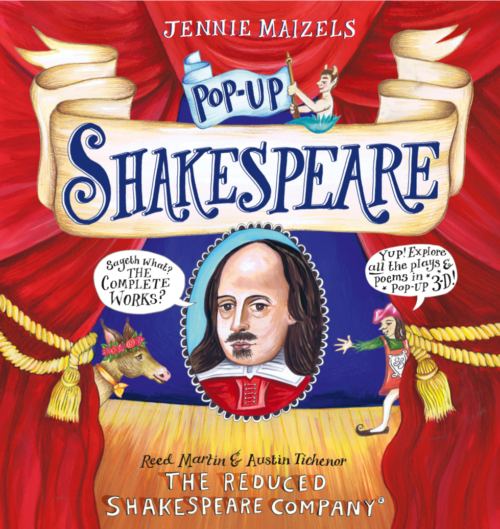
We're thrilled to announce the publication of Pop-Up Shakespeare, the fun and interactive book for Shakespeareans of all ages, beautifully illustrated by acclaimed pop-up artist Jennie Maizels with text by Reed Martin and Austin Tichenor. Published Fall 2017 by Walker Books (UK/Australia) Read more
By austin, ago

Episode 500! Playwright Ken Ludwig

Ken Ludwig (right) is the prolific American comic playwright responsible for such Tony- and Olivier-award winning shows as Lend Me a Tenor, Crazy For You, Moon Over Buffalo, Shakespeare In Hollywood, Baskerville, and almost two dozen more plays and musicals that have been produced in more than 30 countries in over 20 languages. For this special milestone episode, Ken talks about his work, his process, his new book How To Teach Your Children Shakespeare, future projects, the importance of being in touch with Twelfth Night, the difference between farce and muscular comedy, the contrast between prose and poetry, the power of comic engines, and the all-important value of romance. (Length 31:22)

By austin, ago